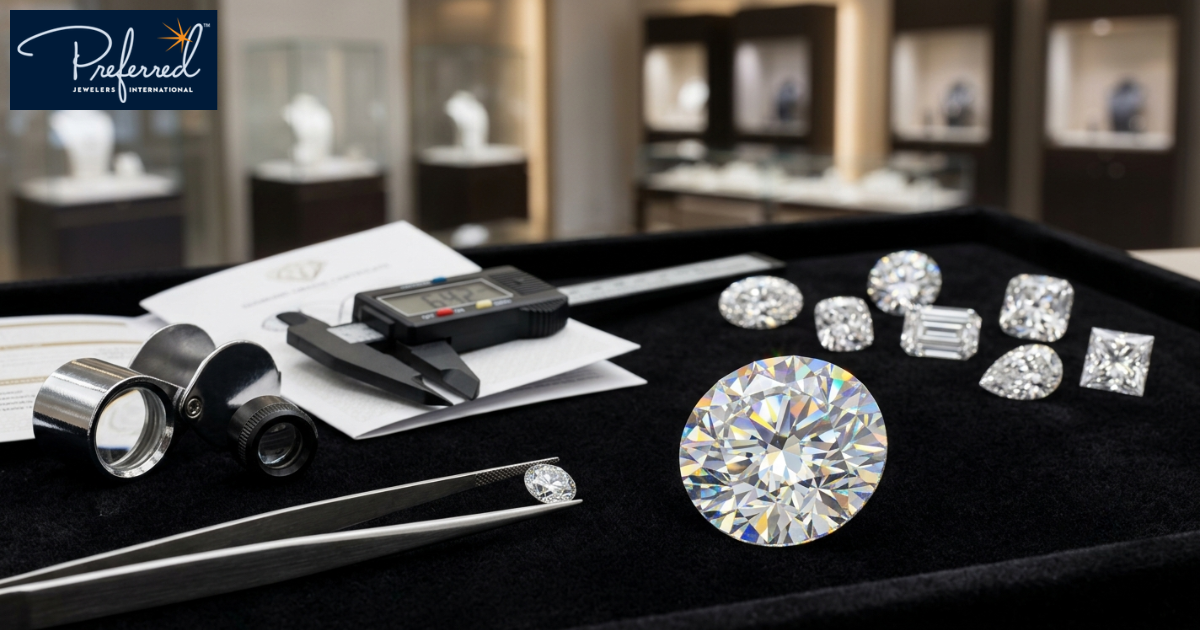
People shopping for certified loose diamonds focus only on the basics to begin with; features such as carat, cut, color and clarity are the most important for them. But the 4Cs only tell part of the story. Two diamonds can carry the same grade on paper and still look completely different once they catch the light. If you want a stone that actually sparkles the way you're picturing it, you'll need to look a little closer at what's behind the certificate, not just what's printed on it.
What is Diamond Certification and Why Does It Matter?
A certificate is essentially a diamond’s report card. It’s created by an independent lab that grades the stone on its own merits, not the word of the seller. GIA-certified loose diamonds are graded by the Gemological Institute of America, widely considered the strictest and most consistent lab in the industry. AGS certified loose diamonds come from the American Gem Society, which is known for its detailed cut grading system, arguably the most precise when it comes to measuring light performance. Either lab is a safe bet but always ask which one graded your stone before you buy.
Best Way to Judge a Diamond's Cut Beyond the Grade
Cut grade gets thrown around a lot, but it doesn't capture everything. Two "excellent" cut diamonds can still perform differently depending on their proportions, depth, and table percentage. Ask to see the diamond's light performance images or an ASET map if the retailer offers one. These show exactly how light bounces around inside the stone, which honestly tells you more than the grade alone ever could.
- Depth percentage: too shallow or too deep and light leaks out the sides
- Table percentage: affects how much brilliance versus fire you'll see
- Polish and symmetry: small imperfections here can dull the sparkle even on a high-grade stone
How to Spot Fluorescence and Hidden Inclusions
Fluorescence doesn't get talked about enough. Some diamonds glow faintly blue under UV light, and while it's usually harmless, strong fluorescence can occasionally make a stone look slightly hazy in daylight. It's worth asking about, especially on larger stones. Inclusion location matters too; a small flaw tucked under the setting is far less noticeable than one sitting right in the center of the table, even if both carry the same clarity grade.
What is the Difference Between Natural and Lab-Grown Diamonds?
Natural loose diamonds hold appeal and long-term value because they’re formed over billions of years deep within the earth. This brings out their uniqueness when buyers want something rare. Lab-grown stones are chemically the same but grown in a controlled environment. Neither option is wrong; it really comes down to your priorities around budget, rarity, and personal preference.
How to Get the Best Value on High-Quality Loose Diamonds
Value isn't just about price; it's about what you're getting for that price. High-quality loose diamonds that are well cut but slightly lower in color or clarity often look just as brilliant as a flawless stone, at a fraction of the cost. Focus your budget on cut first, then color, then clarity, since cut has the biggest impact on how a diamond actually looks to the eye.
Grogan Jewelers By Lon
Grogan Jewelers by Lon has been a name you can trust when it comes to fine jewelry and has offered the finest selection of diamond engagement rings, wedding bands, GIA certified loose diamonds, luxury watches and custom-designed jewelry. A family run jeweler with locations in Florence and Huntsville, Alabama & Brentwood Tennessee known for exceptional craftsmanship, personalized service and expert in-store jewelry & watch repairs. A proud member of Preferred Jewelers International, Grogan Jewelers also offers its customers the assurance of a nationwide warranty program as each customer purchase remains an investment in overall quality, beauty and peace-of-mind.
Conclusion
Choosing among certified loose diamonds comes down to looking past the numbers and understanding how they work together. A strong certificate, a well-cut stone, and a bit of attention to fluorescence and inclusion placement will get you a diamond that looks every bit as good as it's graded to be. Ready to find the one? Browse our collection of certified loose diamonds and speak with one of our gemologists today.
FAQS About Loose Diamonds
1. Why should I buy a certified loose diamond?
A certified loose diamond comes with an impartial grading report to confirm its cut, color, clarity and carat weight. By selecting GIA Certified Loose Diamonds or AGS Certified Loose Diamonds, you are buying a true diamond with an honest grading so there is more transparency and peace of mind.
2. What is the difference between GIA and AGS certified loose diamonds?
GIA Certified Loose Diamonds and AGS Certified Loose Diamonds are graded by the reputable independent grading laboratories. GIA is known globally for its high standards of diamond grading, while AGS sophisticated cut grading system assesses the light performance and brilliance of a diamond. Both certifications can be great options for buyers looking for premium loose diamonds.
3. How do I choose the best natural loose diamond?
When you buy natural loose diamonds, opt for these factors in addition to the traditional 4Cs of diamond quality cut grade, certification ranking, symmetry and fluorescence. Selecting a high-quality loose diamond with an independent grading report gives you the best chances of achieving long-term brilliance, lasting value and peace if mind.