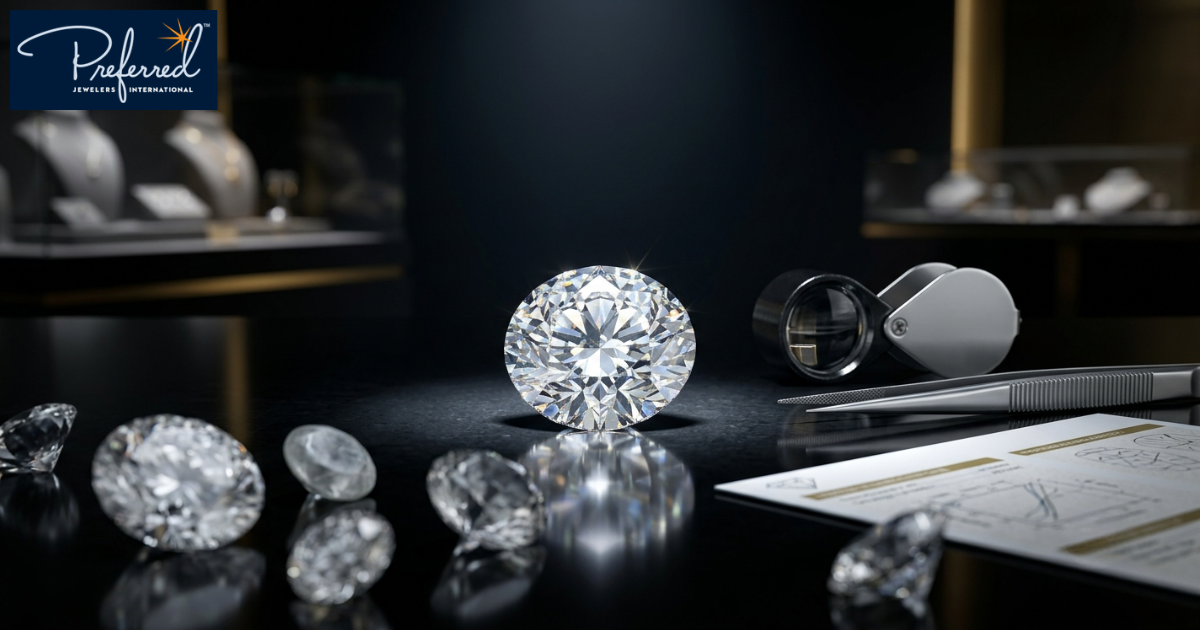
We all wonder whether lab-grown diamonds are even real diamonds or if they are some kind of clever imitation. It's a fair thing to wonder, especially with so much conflicting information floating around online. The short answer is that they're absolutely real. They're not glass, not cubic zirconia, not some plastic stand-in. They're carbon, crystallized into the same structure as a diamond pulled from the earth. The difference is where and how they're made, not what they're actually made of, and once you understand that distinction, the rest of the confusion tends to clear up pretty quickly.
What is a Lab Grown Diamond, Chemically Speaking?
A diamond, by definition, is just carbon atoms arranged in a specific crystal lattice. Lab-created diamonds go through that same arrangement process, just sped up dramatically inside controlled equipment instead of happening underground over billions of years. Scientists use one of two methods, either high-pressure high-temperature or chemical vapor deposition, to recreate the conditions that naturally form a diamond. The result carries identical hardness, refractive index, and chemical composition to a mined stone. Even trained gemologists need specialized equipment to tell the two apart.
How to Tell Lab Made Diamonds Apart from Simulants
This is where a lot of confusion comes from. People often lump lab-made diamonds in with simulants like moissanite or cubic zirconia, but they're not the same category at all. Simulants only look like diamonds on the surface; they're made of entirely different materials and don't share a diamond's optical or physical properties. A lab-grown stone, on the other hand, passes every diamond test there is, including thermal conductivity checks that jewelers use to spot fakes. We can distinguish a mined diamond from a lab-grown one by detecting subtle growth patterns.
Why Do People Call Them Synthetic Diamonds?
The term synthetic diamonds get used a lot, and it sometimes throws people off since "synthetic" tends to suggest "fake" in everyday language. In the gem trade, though, synthetic just means grown under controlled conditions rather than mined. It's a manufacturing distinction, not a quality one. The Federal Trade Commission actually recognizes these stones as genuine diamonds, requiring only that sellers disclose the growth method, not that they call them anything less than real.
Mined vs Man Made Diamonds: Which One Fits You?
Honestly, there's no wrong answer when weighing mined against man-made diamonds; it's really just about what matters most to you. Go with a lab-grown stone, and you'll usually get more size and better quality for the same dollar amount, since these are stones without the added weight of mining costs baked into the price. Mined diamonds, though, come with something else entirely: a story that stretches back billions of years, and for a lot of buyers, that history is worth paying extra for. At the end of the day, neither one gives up anything in sparkle, toughness, or how it'll actually look once it's set.
- Working with a tighter budget? Lab grown usually gets you more stone for less money.
- Care about knowing exactly where your diamond came from? Lab grown offers a fully traceable origin.
- Drawn to something ancient and one of a kind? A mined diamond might feel more meaningful.
Maurice's Jewelers
Since 1935,
Maurice's Jewelers has been a respected source for fine jewelry in Miami, Florida. They provide one of the largest selections of diamond engagement rings, wedding bands, certified loose diamonds, luxury watches and custom designed jewelry. Maurice's Jewelers is a family-owned jeweler that has been positively affecting the lives of customers for three generations through personalized service, expert craftsmanship, jewelry and watch repairs, appraisals, engraving services, and custom design assistance to commemorate some of life's most meaningful moments. Alongside many other retailers, Maurice's Jewelers is proud to continue on the Preferred Lifetime Nationwide Warranty for qualified purchases from Preferred Jewelers International, so every purchase comes with added confidence and lasting protection.
The Bottom Line
So, are lab-grown diamonds fake? Not even close. They're the real thing, just grown differently, and they come with the same certification you'd expect from any mined stone. At the end of the day, pick whichever origin story speaks to you, as long as you're getting full transparency on how the stone was made. The thing which matters the most is walking away with a diamond you love, one that’s backed by honesty and a certificate that proves it, no matter the path.
FAQs About Lab Grown Diamonds
1: Are lab-grown diamonds real or fake?
Lab grown diamonds are real diamonds and not fake or imitative stones. They share the same physical, chemical and optical characteristics as natural diamonds. The only difference is that lab created diamonds are made in a controlled environment as opposed to developing naturally in the ground over millions of years.
2: What is the difference between lab-grown diamonds and synthetic diamonds?
Lab grown diamonds, lab made diamonds, man-made diamonds and synthetic diamonds are terms that are often used interchangeably. They all refer to diamonds produced in an laboratory which have the same crystal structure and brilliance as natural diamonds. They are not diamond simulants like cubic zirconia or moissanite but actual diamonds.
3: Are lab-created diamonds a good investment?
If you want a really beautiful diamond of high quality for less than the price of natural diamonds, lab created diamonds are an ideal solution. Man made diamonds are generally more affordable than natural diamonds which helps on the resale value because you get better brilliance, ethical sourcing and an option of a wider variety of diamond sizes and qualities for almost any budget.